
Published November 6, 2026
Medically Tailored Meals vs. Medically Tailored Groceries: What New York City Medicaid Members Need to Know
Leaving the hospital or managing a chronic health condition can make it difficult to shop for groceries, prepare meals, and follow dietary recommendations. For some New York Medicaid members, the state’s 1115 waiver offers nutrition assistance through Health-Related Social Needs (HRSN) services.
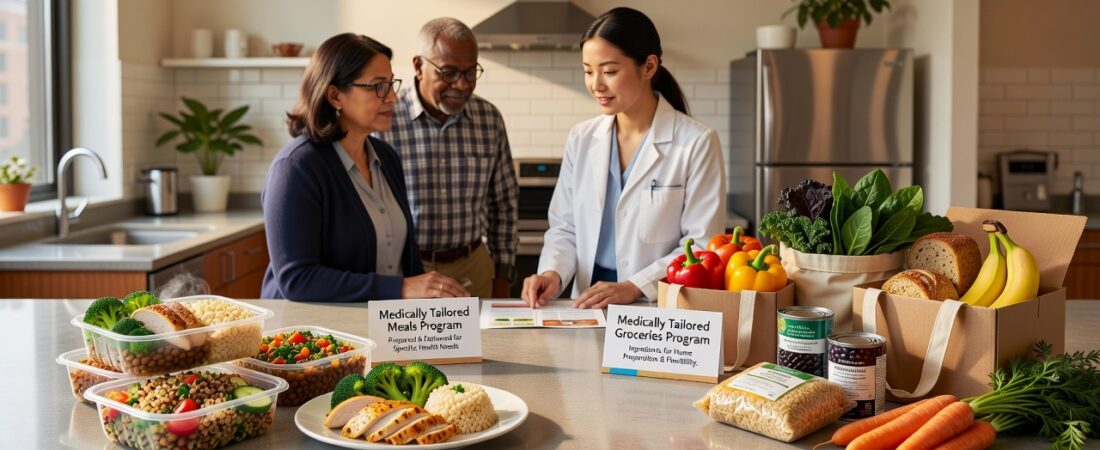
Two options members may hear about are medically tailored meals and medically tailored or nutritionally appropriate food prescriptions. Both can help eligible members access food, but they work differently. One provides prepared meals delivered to the home. The other may provide food boxes or nutrition vouchers that members use to obtain selected foods.
Understanding these differences can help you ask the right questions during your Medicaid screening and determine which service may better address your needs.
What Are Medically Tailored Meals?
Medically tailored meals are prepared meals designed around a member’s medical and nutritional needs.
Under New York’s Medicaid 1115 waiver, meal plans must be approved by a Registered Dietitian Nutritionist (RDN) or Certified Dietitian Nutritionist (CDN). The meals are intended for people with complex or chronic health conditions and must follow established nutrition guidelines relevant to their health needs.
Depending on the assessment and available service, meals may be delivered to the member’s home in prepared form.
For example, someone managing chronic kidney disease may need a meal plan that considers their individual potassium, phosphorus, sodium, and protein requirements. Someone with heart failure may need meals that account for a prescribed sodium restriction.
The exact dietary requirements depend on the individual’s medical circumstances. A diagnosis alone does not establish the appropriate diet.
Medically tailored meals may be worth asking about if:
-
You have difficulty shopping for or preparing meals.
-
You are managing a chronic condition that affects your nutritional needs.
-
You are recovering from an illness or hospitalization.
-
You need prepared meals that follow an approved nutrition plan.
What Are Medically Tailored or Nutritionally Appropriate Food Prescriptions?
Food prescriptions provide eligible Medicaid members with another way to access nutritious food.
Under New York’s 1115 waiver, eligible members may receive this service through either nutrition vouchers or food boxes.
Nutrition vouchers may be used at participating food pharmacies, farmers’ markets, mobile markets, or Community Supported Agriculture (CSA) programs.
Food boxes may include weekly deliveries of fruits, vegetables, and protein products.
The purpose is to help members obtain foods that support their nutritional needs. Unlike prepared meal delivery, food prescriptions do not provide fully cooked meals. Members or their caregivers generally need to prepare the food themselves.
The specific foods and available redemption options depend on the participating provider and program arrangements.
Food prescriptions may be worth asking about if:
-
You or someone in your household can prepare meals.
-
You prefer selecting and cooking your own food.
-
You want access to fresh produce and protein options.
-
You need nutrition assistance but do not require prepared home-delivered meals.
Medically Tailored Meals vs. Food Prescriptions: Side-by-Side Comparison
| Feature | Medically tailored meals | Food prescriptions |
|---|---|---|
| What you receive | Prepared, home-delivered meals | Nutrition vouchers or food boxes |
| Food preparation | Meals are already prepared | You or a caregiver generally prepares the food |
| Nutrition planning | Approved by an RDN or CDN | Medically tailored or nutritionally appropriate food selection |
| Delivery or access | Delivered to the member’s home | Food boxes may be delivered weekly; vouchers are redeemed at participating locations |
| Main purpose | Provide prepared meals suited to medical needs | Help members obtain selected nutritious foods |
| Medicaid coverage | Available to eligible members after screening and assessment | Available to eligible members after screening and assessment |
| Member cost | No charge for eligible covered services | No charge for eligible covered services |
Important: These are separate HRSN nutrition services. Under the approved New York protocol, a member receiving home-delivered meals cannot simultaneously receive a food prescription or pantry-stocking service through this program.
What About Pantry Stocking and Grocery Deliveries?
There is another grocery-related benefit that should not be confused with food prescriptions.
New York’s 1115 waiver separately identifies fresh produce and non-perishable groceries (pantry stocking). This service provides grocery assistance for qualifying households.
However, pantry stocking has different eligibility restrictions. Under the approved protocol, it is limited to qualifying pregnant individuals and children under age 18 who meet the applicable population, clinical, and food-security requirements.
This means that a general grocery box, a food prescription, and pantry stocking are not interchangeable benefits. Ask the Social Care Network which specific nutrition service may be available based on your circumstances.
Who May Qualify for These Medicaid Nutrition Benefits?
Having Medicaid or a chronic medical condition does not automatically qualify someone for enhanced nutrition services.
Under New York’s program, eligibility generally involves several steps:
-
Medicaid coverage: Enhanced HRSN services are available through the applicable Medicaid Managed Care pathway.
-
Nutrition-related need: Screening must identify an unmet need related to food access.
-
Food insecurity: The member must meet the program’s applicable low or very low food-security criteria.
-
Clinical or population requirements: The member must meet the eligibility criteria for the specific nutrition service.
-
Individual assessment: The Social Care Network reviews the member’s circumstances and determines which services are appropriate.
The enhanced population criteria include certain Medicaid Health Home members, people with qualifying chronic conditions or other specified circumstances, pregnant and postpartum individuals, and other designated groups.
Conditions identified in the program’s guidance include diabetes, congestive heart failure, chronic kidney disease, COPD, hypertension, cancer, asthma, sickle cell disease, and HIV/AIDS.
Pregnancy and postpartum circumstances may also qualify under the applicable requirements. Pregnancy alone does not guarantee approval.
What Does the Screening Process Involve?
Medicaid members can begin by completing a Health-Related Social Needs screening. The process helps identify unmet needs involving food, housing, transportation, and other social circumstances.
Here is what to expect:
Step 1: Complete the Screening
Answer questions about your food access and other health-related social needs. The screening can help identify whether you may qualify for existing community resources or enhanced HRSN services.
Step 2: Complete an Eligibility Assessment
If the screening identifies an unmet nutrition need, a Social Care Network navigator can review your circumstances and determine whether you meet the applicable clinical and social eligibility requirements.
Step 3: Discuss Available Nutrition Services
If you qualify, the navigator can help identify the appropriate nutrition service. Depending on your eligibility and available options, this may include prepared meals, food prescriptions, or another nutrition benefit.
Step 4: Confirm the Service Arrangements
Before services begin, confirm the approved benefit, provider, delivery or redemption arrangements, and authorized service period.
Under the general program rules, nutrition services are time-limited. Home-delivered meals and food prescriptions are generally available for up to six months at a time, subject to applicable rules and medically necessary renewal. Different provisions apply to qualifying pregnant and postpartum members.
Can You Receive Both Medically Tailored Meals and Food Prescriptions?
Generally, no. New York’s approved HRSN protocol does not allow members to receive home-delivered medically tailored or clinically appropriate meals at the same time as food prescriptions or pantry stocking through this program.
The Social Care Network assesses the member’s needs and helps determine which service is appropriate.
If your circumstances change, you can ask your navigator whether reassessment or a different service is appropriate. Any change remains subject to program eligibility and authorization requirements.
Ask Your Healthcare Team About Your Nutrition Needs
Medicaid nutrition benefits are intended to help eligible members access food that supports their health. They do not replace medical care or individualized dietary advice.
Your physician or registered dietitian can help explain whether you need a particular dietary approach. This is especially important if you have kidney disease, heart failure, diabetes, food allergies, swallowing difficulties, or other conditions that require specific nutrition considerations.
If you are unsure which service to request, explain your food access challenges and medical needs during your screening. The Social Care Network can help determine which program options may be appropriate.
For families who also need home-based supportHome Care Medicaid NY provides information about Medicaid home care options in New York. Families seeking developmental services for children can also visit ABA Therapy New Jersey to learn about available services.
Find Out Which Nutrition Benefit May Be Available
If you are enrolled in New York Medicaid and have difficulty accessing nutritious food, you may qualify for assistance through the NY Health Equity Reform 1115 waiver.
You can start by completing the New York State Social Care Network screening or contacting the Social Care Network serving your borough.
For Bronx residents, SOMOS Community Care is the designated Social Care Network. Call 1-833-766-6769 or visit SOMOS Community Care to ask about screening and available nutrition services.
For Brooklyn, Manhattan, and Queens, contact Public Health Solutions at 1-888-755-5045.
Screening does not guarantee approval, but it is the first step toward finding out which nutrition resources may be available to you.
Related from Medically Tailored Meals NYC: Medically Tailored Meals Medicaid in the Bronx