
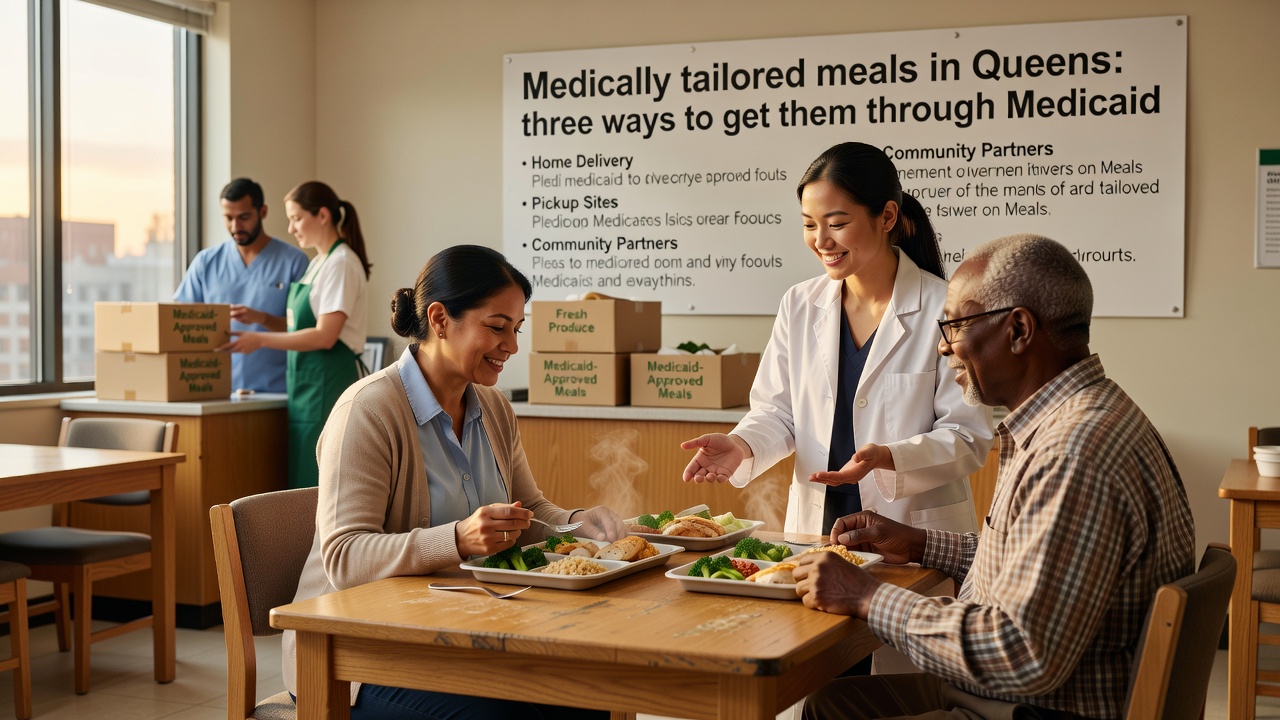
Medically Tailored Meals in Queens: Three Ways to Access Them Through Medicaid
Recovering after a hospital stay, managing a chronic condition, or following a prescribed diet can make preparing meals difficult. For eligible New York Medicaid members, medically tailored meals may be available through the state’s health-related social needs program. If you live in Queens, understanding how to access these services can help you take the next step.
There are three practical ways to get connected: complete a Social Care Network screening, ask your Medicaid health plan or healthcare provider for help, or contact a participating community-based organization. Each route can help you begin the process, but all are subject to the program’s eligibility requirements. Here’s how the options compare and what Queens residents should know before applying.
What Are Medically Tailored Meals Under New York Medicaid?
New York’s 1115 Medicaid waiver, known as the New York Health Equity Reform (NYHER) initiative, supports health-related social needs services through regional Social Care Networks. These networks connect eligible Medicaid members with services that address needs such as food insecurity, housing, and transportation.
Nutrition services can include medically tailored meals, other appropriate home-delivered meals, food prescriptions, pantry supplies, and nutrition counseling. The service offered depends on the member’s needs and eligibility. Medically tailored meals are designed around relevant medical and nutritional needs, rather than being the same as general food pantry assistance.
Being enrolled in Medicaid does not automatically qualify someone for meal delivery. For medically tailored meals under the enhanced HRSN program, applicants generally need an assessed nutrition-related social need, food insecurity that meets the program’s criteria, and qualifying clinical or population criteria. Chronic conditions and pregnancy or postpartum status may be relevant, but the full eligibility assessment still applies.
Three Ways to Get Connected
| Route | How it starts | Who may find it useful |
|---|---|---|
| Social Care Network screening | Complete the state screening or contact the regional network | People who want to start independently |
| Medicaid plan or healthcare provider | Ask a plan representative, doctor, care manager, or hospital social worker for help | People already receiving healthcare or care coordination |
| Community-based organization | Contact a participating local nonprofit or community partner | People who prefer personal assistance or help navigating the process |
These routes can lead into the same screening and eligibility process. The best starting point depends on the support you already have and how you prefer to get help.
Option 1: Start With a Social Care Network Screening
A Social Care Network is the official regional system New York uses to connect Medicaid members with eligible health-related social needs services. Screening helps identify needs and determine which services or resources may be appropriate.
You can begin by completing the New York Medicaid screening questionnaire or by contacting the Social Care Network serving your area. A navigator can explain the next steps, assess eligibility, and help connect you with participating service providers when appropriate.
Potential advantages
-
You can begin without waiting for your doctor to initiate a referral.
-
The screening can identify food-related needs and other support options.
-
A navigator can help explain the process and possible next steps.
What to keep in mind
-
Screening is not the same as approval for meal delivery.
-
You may need to complete an additional eligibility assessment.
-
Service availability and processing times can vary.
This route may suit Queens residents who want to learn what help is available before deciding which provider to contact.
Option 2: Ask Your Medicaid Plan, Doctor, or Hospital Care Team
If you are already working with a healthcare provider or care manager, ask whether they can help you access Social Care Network services.
For example, someone recovering after a hospital stay may be able to discuss food access with a discharge planner or social worker. A person managing chronic kidney disease, diabetes, or cardiovascular disease could ask their care team whether medically tailored meals may be appropriate and how to begin the screening process.
Your provider or health plan may help explain documentation requirements or connect you with the appropriate network. However, the provider’s referral does not replace the program’s eligibility assessment.
Potential advantages
-
You can ask questions during an existing healthcare interaction.
-
Your care team may help identify relevant medical documentation.
-
The process can be coordinated with other support you already receive.
What to keep in mind
-
Not every plan or provider handles referrals in the same way.
-
You may still need to complete the official screening.
-
A medical diagnosis alone does not guarantee eligibility for meal delivery.
This route may be especially convenient for members who already have a care manager or are receiving ongoing treatment.
Option 3: Get Help Through a Community-Based Organization
Community-based organizations (CBOs) can help people navigate local support services. Some participate in Social Care Networks and may provide screening, navigation, or connections to eligible nutrition services.
If completing an online form feels difficult, you can ask a local nonprofit, clinic, or community organization whether it works with the Social Care Network serving your Queens ZIP code. Ask whether staff can help you complete the screening and explain what information you may need.
Potential advantages
-
You may be able to speak with someone in person.
-
Staff may help explain the process in your preferred language, where language assistance is available.
-
You may learn about other food resources if you do not qualify for medically tailored meals.
What to keep in mind
-
Not every nonprofit is part of an SCN or authorized to arrange enhanced HRSN services.
-
Informal assistance does not bypass official eligibility rules.
-
Meal delivery depends on eligibility and participating provider availability.
This route may be useful for people who need help navigating online services or who want to explore several food assistance options at once.
Which Health Conditions May Matter for Eligibility?
New York’s eligibility framework includes clinical criteria that may be relevant to medically tailored meals. Examples of qualifying conditions listed in state guidance include diabetes, congestive heart failure, chronic kidney disease, chronic obstructive pulmonary disease, hypertension, cancer, asthma, sickle cell disease, and HIV/AIDS. Pregnant and postpartum people may also fall within qualifying population criteria.
However, a diagnosis alone is not enough. The enhanced nutrition service also requires an assessed unmet nutrition-related social need and food insecurity that meets the program’s criteria. Additional requirements may apply depending on the person’s Medicaid coverage and circumstances.
If you are pregnant, recently gave birth, receiving dialysis, or recovering from a cardiac event, ask your healthcare team or Social Care Network navigator whether your situation meets the current requirements. Do not assume that the condition by itself guarantees free meal delivery.
Your doctor or registered dietitian should guide any medical dietary recommendations, particularly when managing kidney disease, heart failure, diabetes, or pregnancy-related nutritional needs.
How to Find the Right Social Care Network in Queens
New York assigns Social Care Networks to specific geographic areas. Public Health Solutions serves Manhattan, Queens, and Brooklyn, while some ZIP codes have a separate arrangement involving the Staten Island Performing Provider System. Confirm which network serves your address before beginning the process.
To get started, you can:
-
Visit the New York Medicaid screening website.
-
Review the official New York State Social Care Network directory.
-
Contact the NYC Social Care Network information service for Queens through Public Health Solutions at 888-755-5045. Confirm current service availability and ask how to begin screening.
If you prefer in-person help, ask the network to identify a participating organization near your neighborhood. Availability may differ across Queens, so confirm the current service options rather than assuming every provider serves every ZIP code.
What to Prepare Before You Start
You do not need to assume that a specific diagnosis or referral guarantees acceptance. Instead, prepare to answer questions about your circumstances and follow the instructions provided by the network.
Helpful information may include:
-
Your current Medicaid coverage and health plan, if applicable.
-
Your contact information and home ZIP code.
-
Your food access needs and whether you have difficulty obtaining enough food.
-
Relevant health conditions or pregnancy and postpartum status, if applicable.
-
Contact details for a healthcare provider, if the navigator needs clinical information verified.
Only share personal health and insurance information through an official program or a trusted participating organization. Ask how your information will be used and whether you need to provide consent before it is shared.
What If You Do Not Qualify for Medically Tailored Meals?
You may still have other options. A Social Care Network screening can connect Medicaid members with existing community resources, even when they do not qualify for enhanced services. Depending on your circumstances and local availability, alternatives may include food pantries, nutrition education, food assistance programs, or other meal services.
You can also visit Free Food With Medicaid for additional information about food-related assistance in New York. Check each program’s eligibility criteria and service area before applying.
Frequently Asked Questions
Does every New York Medicaid member qualify for medically tailored meals?
No. Medicaid members can be screened for health-related social needs, but enhanced services have additional eligibility criteria. Meal delivery is not automatic.
Does pregnancy automatically qualify someone for meals?
No. Pregnancy or postpartum status may be relevant to eligibility, but the program’s nutrition-related social need and food insecurity criteria, along with other applicable requirements, still need to be assessed.
Do I need a doctor’s referral?
Not necessarily as the first step. You can start with the state screening or contact your regional Social Care Network. A provider may be asked to verify clinical information during the eligibility process.
Can a community organization help me apply?
A participating organization may help you navigate screening and connect with services. Ask whether it works with the Social Care Network in your area.
Are the meals free?
Services are provided at no cost to eligible members under the SCN program, but eligibility and service availability must be confirmed. A screening or referral alone does not guarantee meal delivery.
Take the First Step Toward Medically Tailored Meals in Queens
If you are a New York Medicaid member struggling to access food that supports your health, you do not have to figure out the process alone. Start with the state screening, ask your healthcare team or health plan for help, or contact a participating community organization.
All three approaches can help you find the right starting point. The next step is to confirm which Social Care Network serves your ZIP code, complete the required assessment, and find out whether medically tailored meals or another nutrition service is available for your situation.
Eligibility and services vary, so rely on the official New York State program and your regional network for current requirements.
Related from Medically Tailored Meals NYC: Medically Tailored Meals Medicaid in the Bronx · Medically Tailored Meals During Pregnancy Medicaid in Queens